


CASINO
COFFEE
BAR
CLUB
TRADITIONAL ENTERTAINMENT VENUES
Traveler's Guide
Haskovo Region


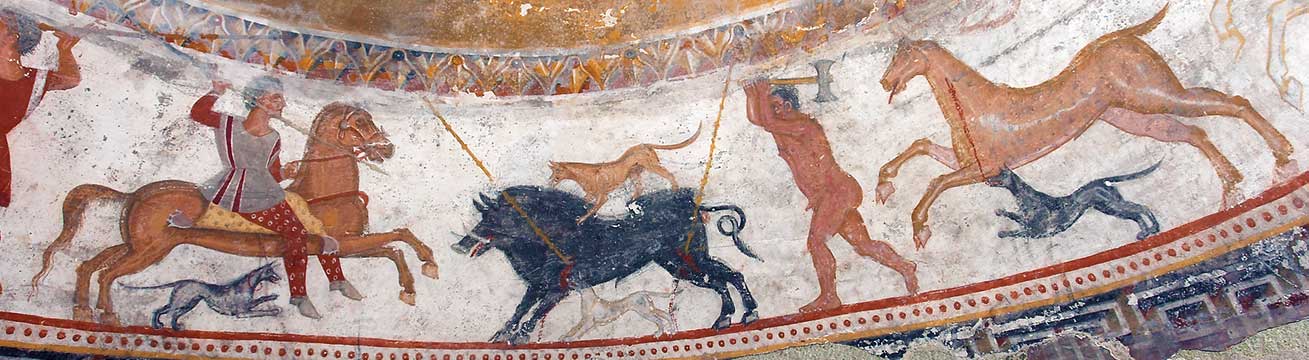


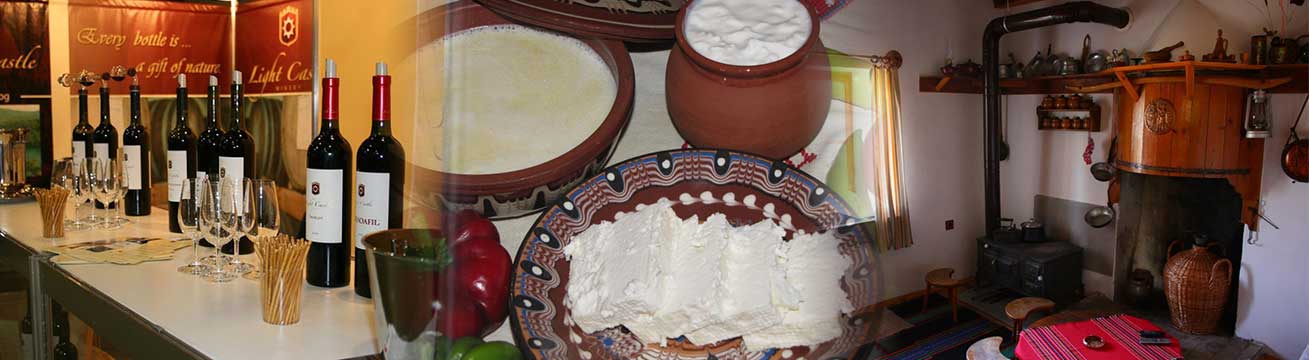
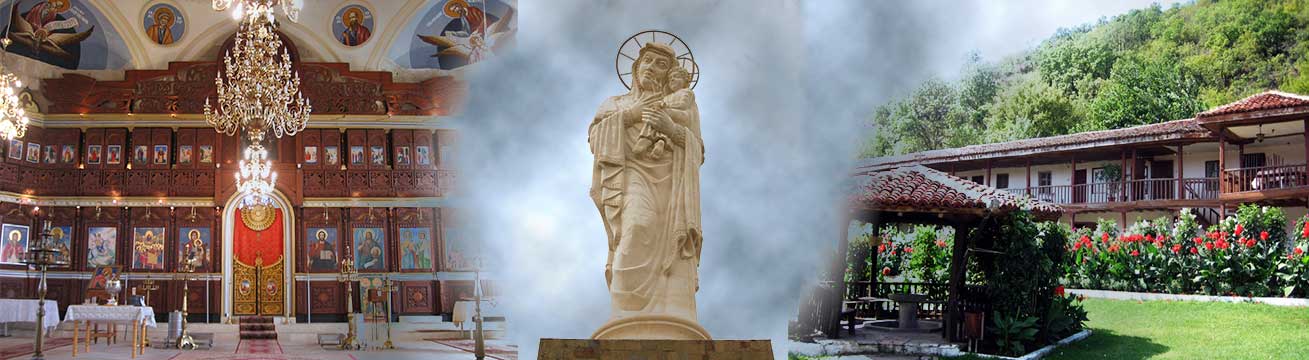
Haskovo is one of the richest regions with historical and architectural places. Declared and announced immovable cultural properties are numbered 597, of which 39 are of national importance. The area is extremely rich of immovable cultural property, which are prehistoric and especially from Early Thracian Era (11-6 century BC).
The modern landscape is very different from what it was in the fifth - sixth centuries. Until the sixteenth century (ХVІ), the region is covered with dense ancient forests, the rivers are considerably deep. Although undergoes minor changes, the climate has always been favorable for the development of agriculture and rearing cattle. Excellent living conditions on these lands since ancient times, compensate the risks to live on a crossroads through which periodically undergo many conquerors, sowing death and destruction.
The favourable climate, beautiful and clean nature, and unique flora and fauna are a key factor behind the development opportunities of tourism in Haskovo region. The region has a leading position in the country in terms of agricultural areas with permanent crops, especially vineyards. Bulgarian wine producers offer their products more successfully in the international market. Many of them opened tasting rooms and offer guests the opportunity to enjoy the superior quality, taste and aroma of Bulgarian red and white wines.
Another prerequisite is the rich cultural heritage of the region: the architectural and building monuments of ancient and medieval architectural sites, monuments of the Renaissance (castles, monasteries, churches and old houses), historic sites and museums. Population of the region has a specific way of life, traditions, customs and crafts.
Tokmakli Dam
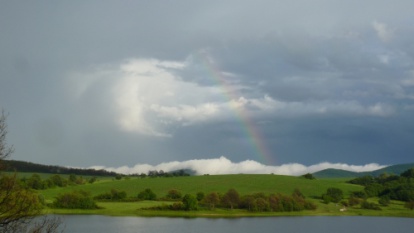 Tokmakli dam lake is extremly beautiful and rich in fish- just pleasure for fishermen.Situated in a beautiful valley with trees and lush lawns.The view will make you fall in ...
Village Svirachi
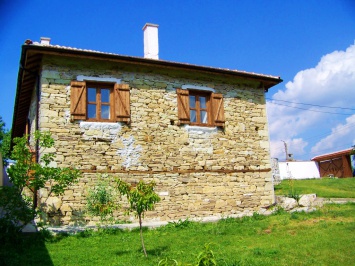 Preserved traditional houses from the late XIX and early XX century with small gardens. They were built from traditional materials - bottom floor is made of stone and floors - ...
Mezzek ecotrail
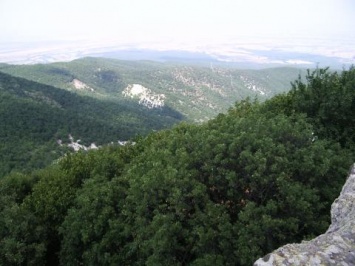 The ecotrail starts from the village center to Sheinovets mountain peak. It is about 7 km long, and its touring takes about six hours for a round trip
Fortification wall of Haskovo
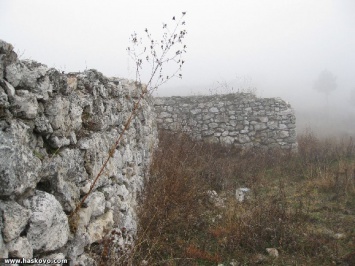 At the end of the VIII century, the hill Hisar (Hissar district currently) south of Haskovo river appeared a new settlement. Surrounded by a thick wall, it gradually grew at ...
Eski Mosque
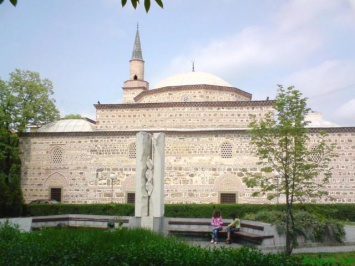 Eski Mosque (from Turkish Eski Camı - "Old Mosque") вас build 1394. In 1967, the Eski Mosque is a monument of culture.
Eco trail Plevun – Meden buk – Byala reka
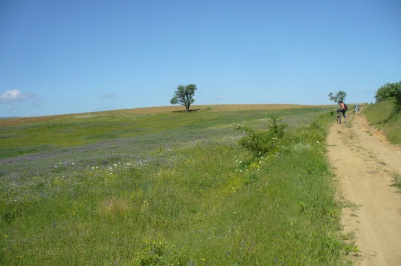 The length is 8,2 km and it takes 3 h.The walk along side shows a mixture of traditional agriculture, abandoned fields, and beautiful landscape. The Byala Reka (White River) Nature ...
Thracian dolmen
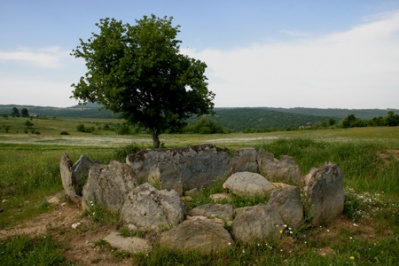 The Thracian tomb near village of Plevun (2km) is a megalithic burial facility from V - I century BC. It is built from large split and roughly shaped gneiss slabs ...
The biking trail The lodge in Gorni Yurutsi – Strazhets – Gugutka – Boturche – Gorni Yurutsi
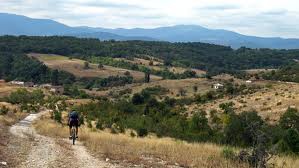 The length is 28,6 km and it takes about 3 h to pass it. Beautiful landscape and rich woods predominating nature, mixture of nature and history, birdwatching and panoramic view ...
The Chernata Skala (Black Rock) protected site
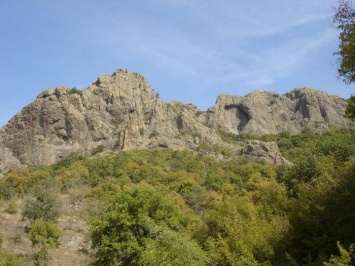 The Chernata Skala protected site has an area of 893.70 ha. It was established with Order by the Ministry of the Environment and Water, on the suggestion of the ...
Historical museum
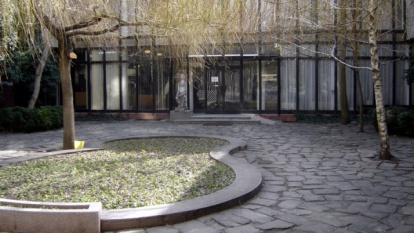 Dimitrovgrad Historical Museum was founded in 1951 as "Museum of the socialist construction" in order to trace the process of building and development of the new socialist town. This is ...
Monument Dimitar Ivanov - Litso, Haskovo
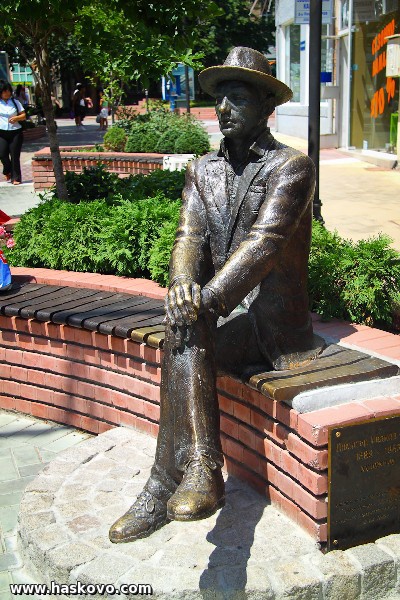 Dimitar Ivanov Litso (1888-1953) was the first artist Haskovo after the Liberation, who was born, lived and worked entirely in his home town of Haskovo. The monument was inaugurated on ...
Monument of Peter Berkovsky
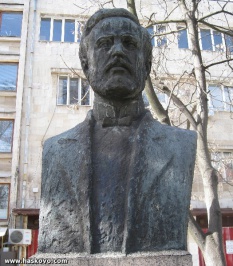 Peter Berkovsky is a Bulgarian revolutionary. After the Liberation, he became the first District Governor of Haskovo Department. In 1881 he was elected Mayor of Haskovo. The monument is made ...

Privacy Policy
×
News
Contact
Copyright©2026. All rights reserved.
Privacy Policy
Intellectual and Industrial Property Rights - Responsibility of the Site and the Region of East Macedonia & Thrace
Except for the expressly stated exemptions (intellectual rights of third
parties, partners and bodies), the entire content of this portal, including
images, graphics, photographs, plans, texts, services provided and all the
files of this website in general, are the intellectual property and the logos
of the offices of the Region of East Macedonia & Thrace and are protected
by the relevant provisions of the Greek law, the European law and international
agreements and treaties. Consequently, none of them can be, in part or as a
whole, sold, copied, modified, reproduced, republished, “loaded”, transmitted
or distributed in any way. Any products or services mentioned in the web pages
of this portal bearing the logos of the corresponding organizations, companies,
co-operating bodies, unions or publications, are their own intellectual and
industrial property and therefore these bodies have the relevant
responsibility. The Region of East Macedonia & Thrace does not have any responsibility
for the content that describes any point of interest. The user understands and
accepts that he/she is not given the right to reproduce, copy, sell, re-sell
and/or commercially exploit in any way part or the whole of the content of the
Portal without a special written permission of the Region of East Macedonia
& Thrace, provided upon request of the interested person.
Given the nature and the size of the Internet, under no circumstances,
including the case of negligence, will the Region of East Macedonia &
Thrace be responsible for any kind of loss caused to the visitor/user of the
pages, services, choices and contents of this portal, which one undertakes at
one’s own initiative. The portal and the Region of East Macedonia & Thrace
do not guarantee that the pages, the services, the choices and the contents
will be provided non-stop and without errors and that the errors will be
corrected. Furthermore, the portal and the Region of East Macedonia &
Thrace do not guarantee that the servers, through which it is made available to
users, do not contain “viruses” or other harmful contents. The Portal and the
Region of East Macedonia & Thrace guarantee in no case the correctness,
completeness or even the availability of the contents, pages, services, choices
or their results. The cost of eventual corrections or servicing is undertaken
by the visitor/user and in no case by the Portal and the Region of East
Macedonia & Thrace.
Links to other Websites
The Portal and the Region of East Macedonia & Thrace do not control the availability, the content, the personal data protection policy, the quality and the completeness of the services of other web sites and pages to which it directs users through hyperlinks. Consequently, for any problem arising during their visit/use, the user has to address directly the corresponding web sites and pages, which have the full responsibility for the delivery of their services. The Portal and the Region of East Macedonia & Thrace can under no circumstances be considered to agree with or accept the content or the services of the web sites and the pages to which it directs users or to be associated with them in any way.
Applicable Law and other Conditions
The aforementioned terms and conditions of the use of the Portal, as well as any modification of them, are governed and completed by the Greek law, the law of the European Union and the relevant international treaties (like indicatively and not restrictively the Law 2472/1997 for the protection of the individual and the protection of personal data, as completed by the decisions of the Chairman of the Committee for the Protection of Personal Data, the Presidential Decrees 207/1998 and 79/2000 and Article 8 of the Law 2819/2000, as well as the Law 2774/1999 and the European Law (directives 95/46/EC and 97/66/EC). Any provision of the above conditions that becomes opposing to the law, it ceases to apply by right and is removed from the present, without the validity of the remaining conditions being affected in any case. No modification of these conditions will be taken into account and will be part of this agreement, unless it has been officially formulated and incorporated into it.
Contractors: DOTSOFT AE & IKNOWHOW AE
